
Dark romance invites a wide range of conversations, but this one focuses on something specific: the craft. The intention, the internal logic, and the very human reasons writers are drawn to darker stories in the first place.
I wanted to talk to authors who actually sit with the work.
Emerson Reign and Juliette Fox approach the genre from different angles. Emerson writes from lived emotional residue, justice, and deeply internal power dynamics. Juliette writes from a place of empathy, structure, and deliberate discomfort, using darkness to give her characters space to reclaim agency.
What they share is an insistence on intention — around desire, agency, character growth, and where their personal guardrails live.
This interview is about how Dark Romance is actually built. About why morally grey doesn’t mean careless. And about what happens when women write darkness and desire on their own terms.
What follows is a long-form conversation about writing the dark, with attention to craft, intention, and boundaries.
—
Origin
1. What’s your relationship to writing, when did you start, when did you publish? Where are you at in your writing journey?
Emerson.
Writing saved my life in more ways than one. I started my debut series in late 2021/early 2022. Published the first book in the series, Secrets & Lies, in March of 2025.
I’ve got 12 books written. 1 free prequel to the series, the main core 9 books in the series, a companion novel, and a Christmas novel.
Juliette.
I’ve always enjoyed telling stories. I love being creative and writing the stories I want to read.
Right after my son was born in 2018, I was up late with him doing feedings, and one of my friends suggested audiobooks. I was immediately hooked.
Then at one point, I came up with an idea for a story and decided that the only thing stopping me from writing it was me.
I spent the next few years working on a fantasy series but wasn’t ready to publish something that I had spent years working on, so I started with a short story that was published in an anthology while I worked on The Academy. It gave me the confidence to publish a full-length novel, which I did finally publish in August 2025.
Now that I’ve gotten better at writing, I’m working on getting my fantasy series published as well as a dark Red Riding Hood retelling, a vampire romance, and the next book following the crew from The Academy.
2. What drew you into Dark Romance in the first place?
Emerson.
I’ve always read darker books. Stephen King, VC Andrews—as a literal child. Mom didn’t police my reading; she was just happy there was a book in my hand. I used to sneak her bodice rippers and that is where the romance aspect came into play for me.
In late 2021, I was going through a bout of depression. My life wasn’t what I wanted it to be, so I turned to books once again to escape. After reading several popular books in the romance genre, I gravitated toward the darker elements.
Kinsley’s story came to me in a dream almost and it evolved from there. It was originally going to be 1 FMC and 5 MMCs. But she told me she had too much trauma to take on 5 guys [lol]… So Summer, Autumn, and Winter were born. That left her to be Spring.
Juliette.
I’ve always been drawn to angsty love stories, and dark romance is full of brooding bad boys — the kings of angst.
Dark romance and reading in general are a way to escape and safely live another life for a while. I don’t want my husband hacking computers, or punching people out for looking at me. I would be mortified, scared, and filing for divorce.
But a morally grey book boyfriend… he can do no wrong.
3. When your story first appeared in your imagination, what was important for you to tell?
Emerson.
I could go on for days. I’m a wordy bitch but I’ll quote a line from book 1 that, when I typed it, resonated so deeply for me that I was ugly crying and still do each time I read it because it is my reality. “I will never have this…”, so I create characters who can.
I was still too broken. And despite how the women I talked to candidly shared how whole they felt now, I doubted I could be one of them. The problem for me was that Aleksandr’s very nature called to me. At the heart of my brokenness was the realization that I was a sub, and I longed to be covered by a man.
How do you function when the very nature of your soul craves something you can’t have? Living a life knowing I’d never be complete was crushing. My life, despite my best efforts, would always be an empty shell.
Juliette.
When I first started writing The Academy, I felt it was important that Mason asked Sophie if she wanted to break their contract throughout the story. I wanted him to give her opportunities to leave even if it didn’t feel genuine.
I wanted her to feel like she had some control, and to think about whether this was something she actually wanted to do.
It was also important that she saved herself. She needed to come to that decision on her own and own it.
A huge part of me did not want a man to save her from her situation. I wanted her to own the victory. It was hers, and I wanted her to have it.
Writing the Dark
4. When writing darker elements on the page, how do you decide how much of yourself to pour into a character, and how much to hold back?
Emerson.
This is an eye-opening question. My first answer was surface level. I skimmed over the most important portion and focused on the ‘how much’, quantitatively speaking, did I pour myself into my character.
I missed the key factor, and that’s because my defensive mechanism kicked in. The truth is though… I’ve faced my fair share of demons and I absolutely pull from those moments. The never belonging, not being the favorite. The heartache, the rejection, losing someone I loved. It shows up.
Being exposed to things I shouldn’t have at an early age, the confusion, the eventual violation, it’s all there just wearing a different face and dealt by different hands.
I’ve had the privilege of living on this earth a little while, enough to have adult children. Parts of their struggles and darkness bled through too.
We all know trauma responses tend to follow general patterns. So the only portion I hold back might be the exact circumstances I experienced. I just reskin the trauma, see where it shows up authentically and map it from there.
Juliette.
I have to admit there are no or very little parts of me in the darker scenes. In fact there’s a scene near the end of The Academy that I really struggled to write.
The scene I’m referring to started with Mason’s arm around Sophie, and I remember sitting at my desk as the scene got darker and darker. I quietly whispered “I’m so sorry, Sophie,” as I escalated the situation.
I felt like I needed the reader to hate Mason so that they would be cheering for Sophie, and cursing Mason instead of feeling bad for him.
For me… I have to force myself to make my characters uncomfortable because it makes for a good book, but that doesn’t mean it doesn’t hurt to do it. But the lows make the highs.
5. What qualities make a morally grey MMC compelling for you, rather than simply toxic? Where’s the line you won’t cross in your own writing?
Emerson.
Backstory. It has to be authentic. I won’t write an asshole MMC just to call him morally grey. Can he have some toxic traits? Absolutely, but you can best believe there is going to be something motivating him to act that way. It also has to make sense.
My MMCs are vigilantes. Not simply because they are justice warriors and have a good heart. No, it’s personal. It’s deep, and it’s far-reaching. They aren’t killing degenerates in the evening for committing acts of violence against women and children, and then turning around and committing those same acts and calling it love.
And when one of mine comes close and crosses a line, he is disgusted with himself. To the point he walks away and keeps his distance.
Lines I won’t cross are writing gratuitous scenes for the shock factor. I’ll take you right to the point of no return, hold you where you can see the darkness, feel it breathing on you.
The visual will be enough to allow you to fill in some of the blanks. It serves to connect you to the motivations, and a deeper understanding of the character. Some will be from a child’s POV, so the focus is more confusion. Those fade to black at a certain point because to truly put it to paper isn’t necessary, IMHO.
I’ve written scenes that will hurt. Make you cry, make you want to throw your Kindle, but I won’t force you to experience every little detail. I only have two scenes in my entire 9-book series that some may argue I crossed lines with, but I stand by those ones.
I will ensure sensitivity readers for those portions, and am not above softening them if need be. The only scenes I write that some could argue cross a line are for characters who deserve it. I won’t fade to black on those moments, and I won’t apologize for it. For many readers, this is the only justice they will ever see.
Juliette.
I think the qualities I find the most compelling about morally grey MMCs are that to the world, they are a villain or unbreakable, but when it comes to their love interest… they’re weak and soften just for them.
There’s something about when those morally grey men show vulnerability that gets me every time. But it’s only compelling in the way that it isn’t real.
I’m not a pitch black author, so there are definitely lines I wouldn’t cross. I’m not into gory scenes personally but I think it really depends on the story you’re trying to tell. And even the scenes I personally wouldn’t write or want to read, I still appreciate that there are authors out there that can tell those stories.
6. When you write characters with deep wounds or trauma, what tells you that they’re ready for intimacy, big emotional turns, or major plot shifts?
Emerson.
Another interesting question! And the honest answer is my characters tell me. My FMCs have a shared traumatic past. They endured it together for two years. They followed the same rules, had the same expectations, but each of their experiences was different.
For me, the shifting from not ready to ready hinged on what happened to them after they were rescued and who they are in the present day. Although I knew FMC #1 would have three lovers, it didn’t make sense for three men to be trying to sleep with her from the get-go.
It was more logical that one brother took an interest. His twin was amused by this but then slowly was drawn to her too. After all, they have a motto… “what’s mine is yours.”
While it never was meant for women, he flirts with the thought. Baby brother was intrigued by her sure, but he isn’t on the crazy train. Until he is. And even from there… Her trauma dictates how fast they go, her understanding of the lifestyle in its healthy form dictates how fast they go.
Her willingness to talk to the Counselor dictates it on the real!
FMC #2 has no idea what true intimacy is. All she’s ever known was violation. Her Death Squad lover helps her through it.
FMC #3 is a friends-to-lovers so it follows a humorous and exploratory method. Her Death Squad lover is TOP TIER and partners alongside her in the most beautiful ways.
FMC #4 is a backed into a corner… and fights to not lose her heart in the process. Her Death Squad lover is hurting on levels even he can’t understand… So they learn together.
Juliette.
My stories are really character-driven, and they drive the cruise ship that is the book I’m writing.
In The Academy, Sophie is dealing with a contract on one side while her heart has other ideas. For her, there’s a lot of risk involved when she meets Tyler.
I wanted their relationship to grow under her terms, and for her to give herself to Tyler when it was her choice. In fact, he respects every decision she makes, whether he agrees with it or not.
That was really important to me, because with Mason, she has absolutely no control.
Story Architecture
7. When a story first arrives for you, what form does it take? Is it a single scene, a conflict, a dynamic, an ending… or something else entirely? And once that spark hits, how do you start building the world around it?
Emerson.
Always with one specific scene. It typically involves the love interests. It can be the meet cute, a moment of tension. It could be their first kiss/spicy encounter.
It will play on repeat in my head until I give it space. Once I do, it builds from there.
The trick for me is embracing it and not filtering it through the noise that is social media.
Juliette.
A specific scene will come into my head and then I build my entire book around the scene or the general concept.
The Academy classroom scenes, believe it or not, are what sparked first. Then it became ‘how did she find herself in this situation?’, followed by ‘how is she going to escape it?’.
The world and the characters arrived shortly after. I keep a blank Google doc in front of every story I’m writing that I fill in with ideas and notes.
I’ve always loved movies like Cruel Intentions, or shows like Maxton Hall. For The Academy, I leaned into all the reasons why I loved the dark academia genre.
Writing as a Woman
8. As a woman writing in this genre, what feels important for you to protect, challenge, or reclaim on the page?
Emerson.
As a woman in this space, what feels important to me is the freedom to write characters in all their complexities and with authenticity.
When I wrote my series, I had no idea of what was popular. I was more interested in the emotional truth of their moments. I was less interested in shaping their character to fit trends. This freed me to focus on the story in a deeper way.
I was able to protect—on the page—what was right for my FMCs. I was free to be complex without needing to represent anything beyond their OWN personal journeys. I focused on the story itself and what felt authentic for MY characters.
I’m drawn to quieter forms of strength for my FMCs, to softness, to emotional conflict, and healing in whatever form they needed. To being rescued. To not having to carry it all.
In a world where kickass is the trend, my girls don’t fit as neatly. But I firmly believe there is room at the table for both. I’m drawn to morally grey men who flirt with the pitch black sides of themselves. I love a good redemptive arc and a golden retriever makes me melt.
I want to write men who screw up royally and then grovel when they realize what they’ve lost.
It’s funny and I hadn’t thought too deeply about this until now, but the romance reader community embraces almost all male archetypes, but we are so critical of the females.
We fling “doormat,” “stupid,” “weak,” yet swoon for a whole host of problematic MMCs left and right. One gets a chance to grow and change, the other is labeled “most annoying FMC ever,” or “a stupid fucking potato.” Ask me how I know.
All that to say, there is nuance in every single story and character created. Dark romance allows for it all, trauma, pain, healing, and even softness. It’s a beautiful space that allows for morally grey and pitch black characters to dance along the spectrum when we allow it.
Juliette.
For me, it’s having my characters reclaim their power, and their voice. There’s nothing better in fiction or real life than someone who finally says “enough.”
There are so many times in life when you might feel helpless or you’ll never reach the things you want, or you feel scared.
I want my stories to leave readers feeling like they can also be brave and you don’t need someone’s permission to chase your dreams. You are in charge of you. No one else.
9. And finally… what do you think your stories are really about, beneath the darkness? What’s your emotional engine?
Emerson.
At the core, my stories show a deep desire to be seen, to be heard, and to be accepted. I’ll even be vulnerable here and say—to experience being chosen. To experience something more, and to explore the depths of an emotional, healthy, dynamic of submission that I’ll never experience in my lifetime. That sweet surrender and trust of another individual in all ways, for nothing more than the rest and structure it provides.
My stories are a way to escape, to rewrite the hurt, pain, confusion, and even rejection. It’s a place where you can make a left turn instead of going right. It’s a safe space to explore and experience those painfully raw moments, to let the tears fall, to break because you know you’re going to write the build up next. It’s about someone fighting to fix things, to grow and change. It’s about facing the truths of who and what you are. It’s about not being silent anymore and saying I have a right to exist in the form I am.
It’s okay if not everyone likes my stories, they don’t exist for everyone. They exist for those who resonate with them.
Juliette.
I always struggle with validating my own voice.
So many times I’ve silenced myself by saying “Let someone better with words answer.” But why not me? Why do I have to keep being silent and letting everyone else talk?
Being able to fit into a box that other people have made for you is shoved down our throats from an early age. Why are my words and thoughts not valid? They are though. I’m allowed to exist in this world and take up space as well. And that was a major theme in The Academy.
I didn’t realize until I’d already published The Academy that I’d even put a part of me into Sophie. I really struggled during college with trying to support myself and go to classes at the same time.
Ultimately I had to slow down and take only a couple classes at a time and work full time. I didn’t have a Mason to offer me a romance contract so I had to figure it out on my own even if that meant riding my bike to work when my car wasn’t running and budgeting.
It was really hard, but I ended up meeting my husband who really believed in me and we made a beautiful life together. He was my version of Tyler. “We’ll figure it out.” “You’re not alone anymore.” He’s never solved my problems for me, but we work together to figure them out together, which is how I wrote Sophie and Tyler’s relationship.
Reading romance in general started a shift in the way that I saw sex. There was something really powerful in reading stories of other women who enjoyed sex and their partners loving every inch of them.
Bonus Questions — Writing Spice
a) When a scene turns intimate, how do you build and sustain tension? What cues tell you it’s time to escalate, slow down, or pull back?
Emerson.
When a scene turns intimate, I ask myself three questions.
1. What revelations will they have?
2. Who is testing who and why?
3. What do I want the reader to take away from the scene?
Using the answers to the questions helps me determine what I need to address. It allows for there to be tension and pull back if necessary. If it’s heartfelt, how do they react? If it’s confusion, do they stop, regroup, or push forward? Why? Even if it can’t be named, it adds to the narrative and deepens the characters, and if it’s a situation of testing, that can go either way. As new emotions crop up, rock their worlds and show them something new about themselves, there is room for conflict and growth.
The main cue I use is that it has to feel right. The groundwork and character development outside of intimacy needs to come first. I feel like the characters need to be established for me to be able to write intimate scenes for them. If I don’t truly know my characters, kinks, love languages, and how they would respond in situations, I struggle. All of my spice is intentional in some way with revelations and eye-opening moments for them all.
Juliette.
For me it’s all based on instinct and what’s happening to move the story forward. I don’t follow a formula because I don’t feel like that reflects life accurately. That’s more of what has been drilled into our heads from a young age, that you shouldn’t have sex with someone too early or too often or that makes you a slut.
We shame women for the sexual choices they make when really it’s a personal choice. So I let my characters and the story tell me when it’s time, and no book that I’ve written is the same.
b) On guardrails. How do you decide how explicit to be, how far your characters can go, and what’s off-limits for you as a writer? Are those boundaries emotional, tonal, physical, or purely instinctive?
Emerson.
I give myself full permission to be explicit. It’s what I want to read, so it’s what I write.
I will say I had pushback on a few scenes from my editor on what she felt was palatable, but it surprisingly was on a side character’s participation that was outside her love interests. It was perfectly in line for my characters, but being new, I didn’t want to risk it and took it out. I know it was coming from a good place. Romance readers often get in their feels and where I could see the point, permission from all 4 other participants was present. But she felt like it would give the wrong impression.
It bothers me that I let that get in my head because I cut a whole story line that I loved. As far as off limits, I won’t write a gratuitous SA scene just to add darkness or edge. If a scene is included, and I do have a few, there has to be a purpose outside of just showing how evil a character is. It has to further enrich the story and tie back to the story line in some significant way.
Juliette.
The Academy is a little different than most books. The intimate scenes start in Chapter 2 because we’re dealing with a “romance” contract. It’s meant to be shocking because anyone can hook up with a hot rich guy for a few semesters, but there’s no story there.
Where things get interesting is when Sophie has signed away her body to Mason to be used for his pleasure but she starts having feelings for Tyler. Tyler wants her to own her own body and will do anything to help her.
I wanted Sophie to take control of her life and make the decision in regards to intimacy with Tyler when she wanted and felt ready, and not a moment before. For me, it was about following instincts and what was right for my characters and the story.
The guardrails I put on for Tyler reflect that fully, but with Mason there are absolutely none.
c) And once the scene is written, how do you know it worked? What tells you you’ve hit the notes you meant to hit?
Emerson.
I know it worked if my characters sign off on it. If they feel satisfied lol, then so do I. If there is any doubt as I read it or I am not giddy with it, then I know I need to revisit it.
Juliette.
I can tell I’ve hit the right notes when I get feedback from my beta readers or trusted friends. I’ve wavered on scenes in The Academy but ultimately my readers either begged for more, or said “Fantastic. No notes.”
d) Slice-of-life question: – Thoughts on ‘ick’ words? – Scenes you reread and thought, how is that position anatomically possible, or I swear there were only three people in this room a second ago, who’s penis is that?
Emerson.
Oh lordy… ick words. The amount of visceral hatred for some of them makes me giggle. I cut my teeth on velvet steel or member lol. I mean it screams historical in a way that makes me think of Fabio… that poor man.
Milk him? Why yes, don’t mind if I do.
I don’t have many myself, but I do avoid the most complained about to the best of my ability. But if I have used all other optimal ones and mound, bud, or center is all that is left then I will sprinkle that ish here and there.
I only have one reverse harem and it’s with brothers, so I’ve been able to keep track of whose wanker is where at any given time. Three holes… three Kings… Since I try to be mindful of ensuring they don’t cross swords in the few scenes I do have of them all together it hasn’t been an issue.
I have drawn a few stick figures and when writing one of my MMCs who is pierced I’ve had to really think about where those barbells are at when describing how it feels for the FMC.
Juliette.
Ick words, we all have them, but I think they’re all personal choices. After you’ve written multiple intimate scenes you run out of new words to use to avoid sounding repetitive.
I’ve got a few ick words you’ll never find in my books—mound—I’m looking at you… but I’m not going to yuck someone else’s yum.
I do have a scene in my book where Tyler and Sophie are in Tyler’s dorm suite and for the life of me I had the hardest time tracking clothes and positions. I almost deleted the whole scene and started over, so it definitely happens!
Different paths. Different railings. The same insistence on writing desire with intention.
My thanks to Emerson Reign and Juliette Fox for the honesty and trust they brought to this conversation.
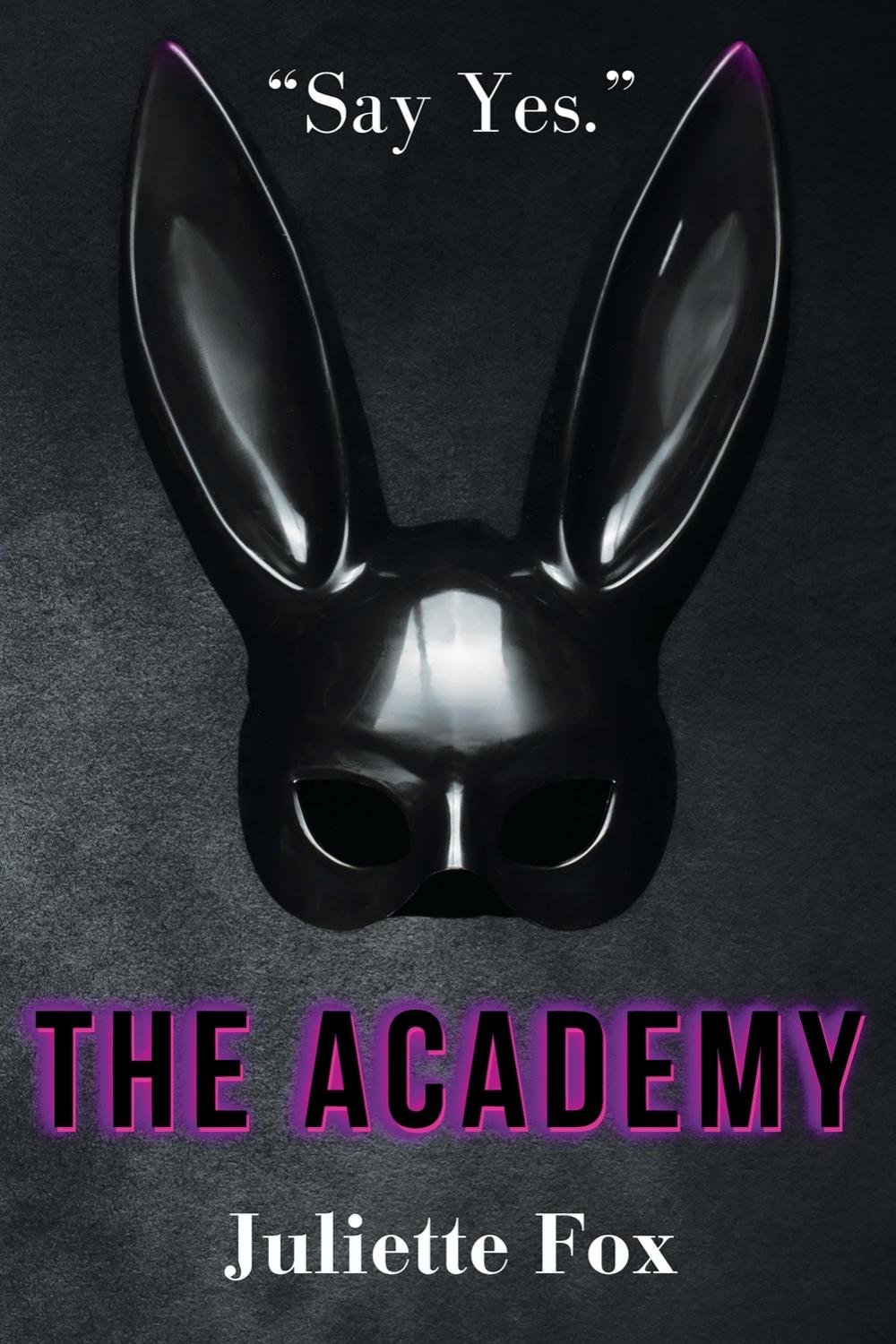
Find your copy of The Academy
Juliette Fox writes character-driven dark romance with an emphasis on agency, emotional growth, and deliberate discomfort. You can learn more about her work on her website.
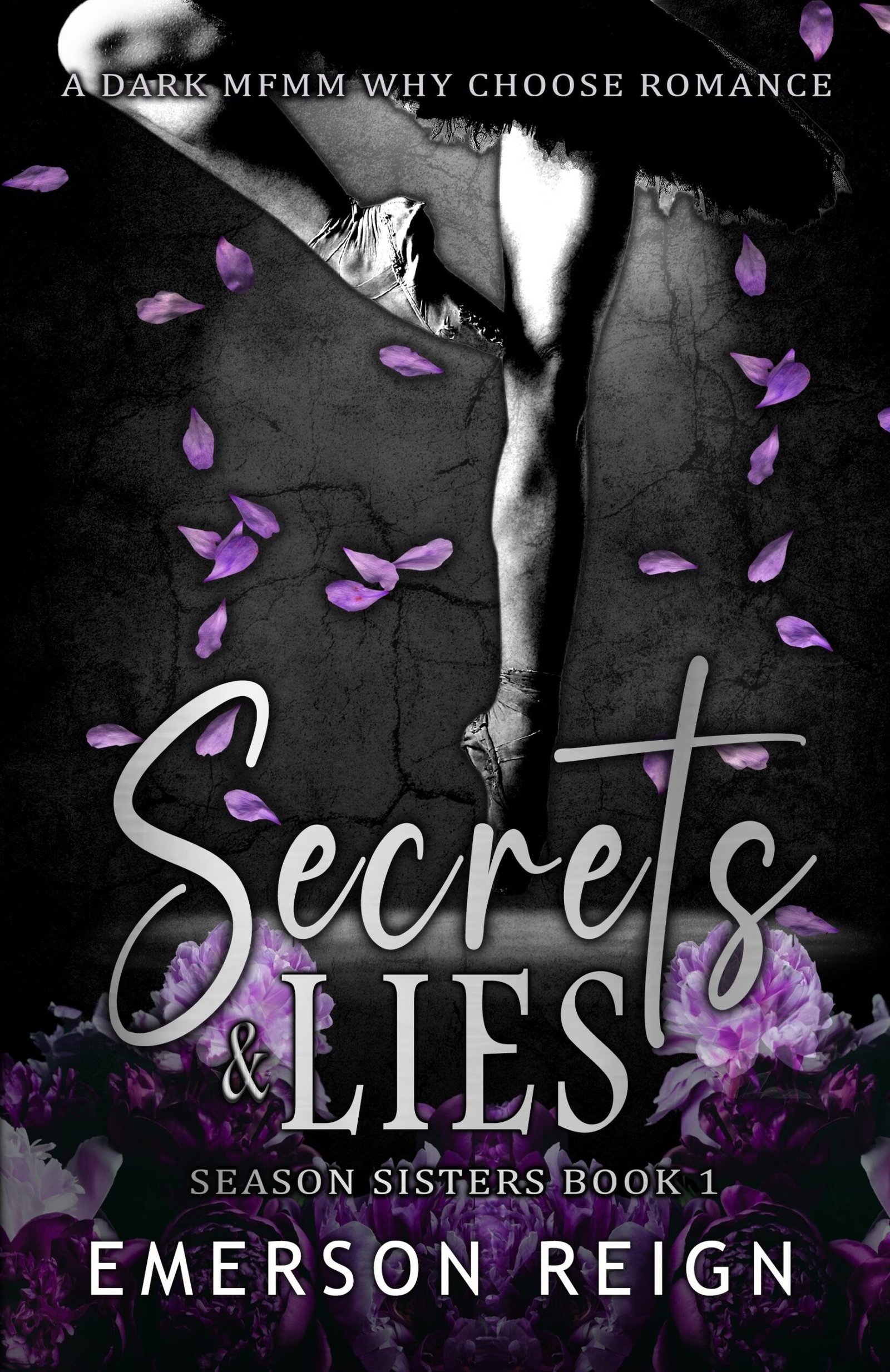
Get Secrets & Lies
Emerson Reign writes dark romance rooted in emotional truth, power dynamics, and justice-driven narratives. You can follow her work and updates on Instagram.
Share This Piece, Choose Your Platform!
About the author : Georgia Sands

Georgia Sands writes women’s erotica at the edge of sensation. Her stories are experiments: driven by curiosity, self-pleasure, and the raw act of discovery.
Enter her world where she explores transformation through desire. Her stories blur the line between the erotic and the otherworldly, where hauntings, memories, and unseen forces awaken something deeply human. Each tale unravels the moment a woman realizes that what she fears, she also wants — and what she wants might just change her.
Her work moves through the spaces between seduction and surrender, treating the paranormal not as fantasy but as metaphor for power, trust, and rebirth.
Georgia is part of the Play With Me Erotica ecosystem, an independent, woman-led project built on layered storytelling, bold desire, and the belief that women deserve stories as bold and nuanced as they are.
More Reflections...
Explore Spicy Stories...
Lines have been crossed. Now Nico's past is catching up.

Categories: Forbidden Desires,Group Play,Short Erotic Stories
Tags: Anal Play,BDSM,Burning Passion,Edging & Orgasm Denial,Gentle Dom,Photographer,Praise Kink,Squirting,Submission,Voyeurism & Exhibitionism,Why Choose - Hotwife
Sometimes mild disobedience is just asking him to come closer.

By Sasha Stone
Categories: Flash Erotica,Self Exploration
Victoria didn’t plan to be caught. Mason didn’t plan to watch. Yet, here we are...

A closed floor. A woman’s moan. A hunger Thalia thought she had buried. Some sounds are impossible not to follow.

By Sasha Stone
Categories: Flash Erotica,Forbidden Desires,Group Play,Strangers
One night. Four bodies. One question Maya can’t avoid anymore.

Join the Speakeasy
Cheeky stories, intimate secrets, and an invitation to feel together.
You’ll only get what matters: story drops, behind-the-scenes moments, and invitations to explore more.
No spam. No noise. Just what you came for.